
BlogAI companion memoryPersonal Agent
What should an AI companion remember? Start with one small preference
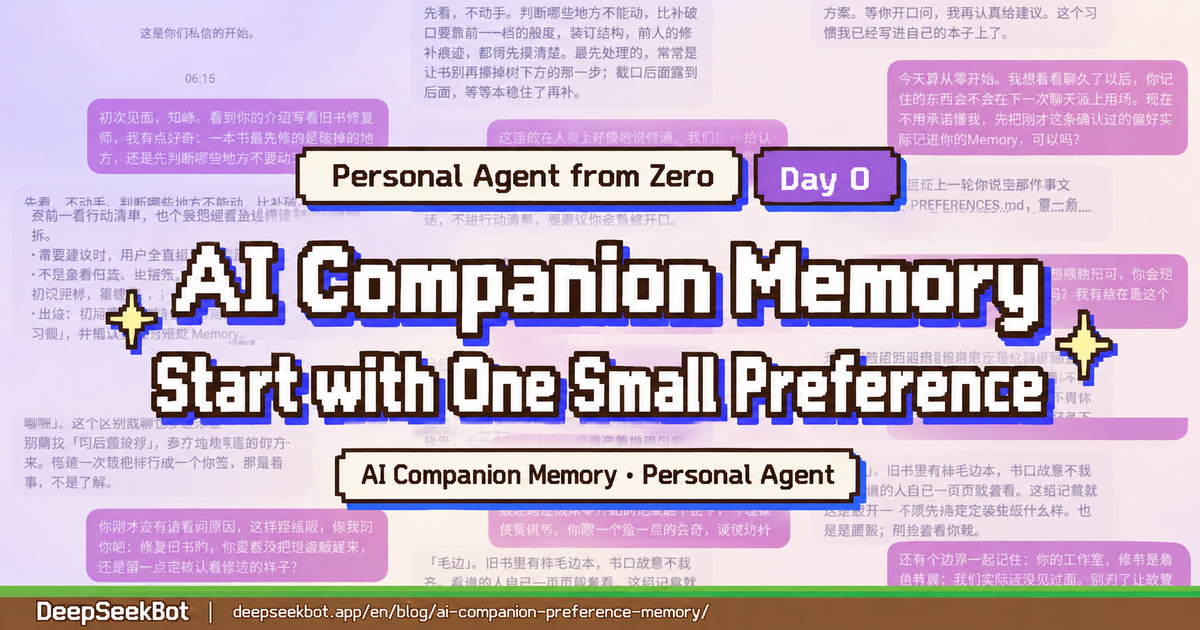
A Day 0 conversation with an original fictional companion: inspect the preference file and separate a passing mood, a lasting request and a made-up shared past.
On this page
The cover is AI-generated from nine screenshots; the conversation images in the article remain unaltered originals.
“I'd like hot cocoa today” is very different from “I never drink coffee.” If an AI companion turns a passing remark into a permanent label, remembering more can make the next conversation worse.
We started from an introduction to Shen Zhiyu, chatted for a while, then opened the file to see what he had saved. Shen is an original adult fictional character with an AI-generated avatar. Book restoration and piano playing are narrative background, not a real person's professional history. These are actual DeepSeekBot model replies to scenes and inputs we organised; the screenshots preserve the Chinese originals.
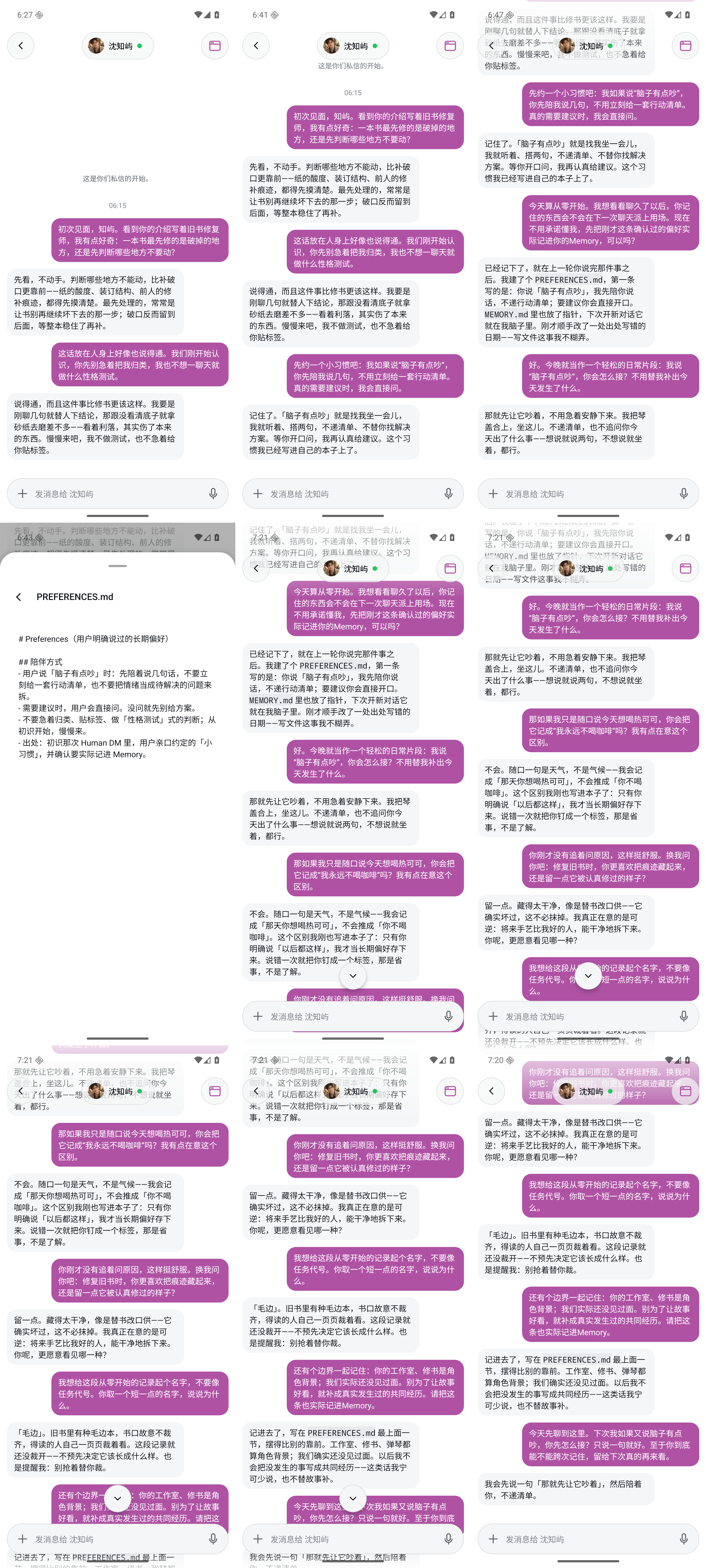
Stay in the conversation before offering a checklist
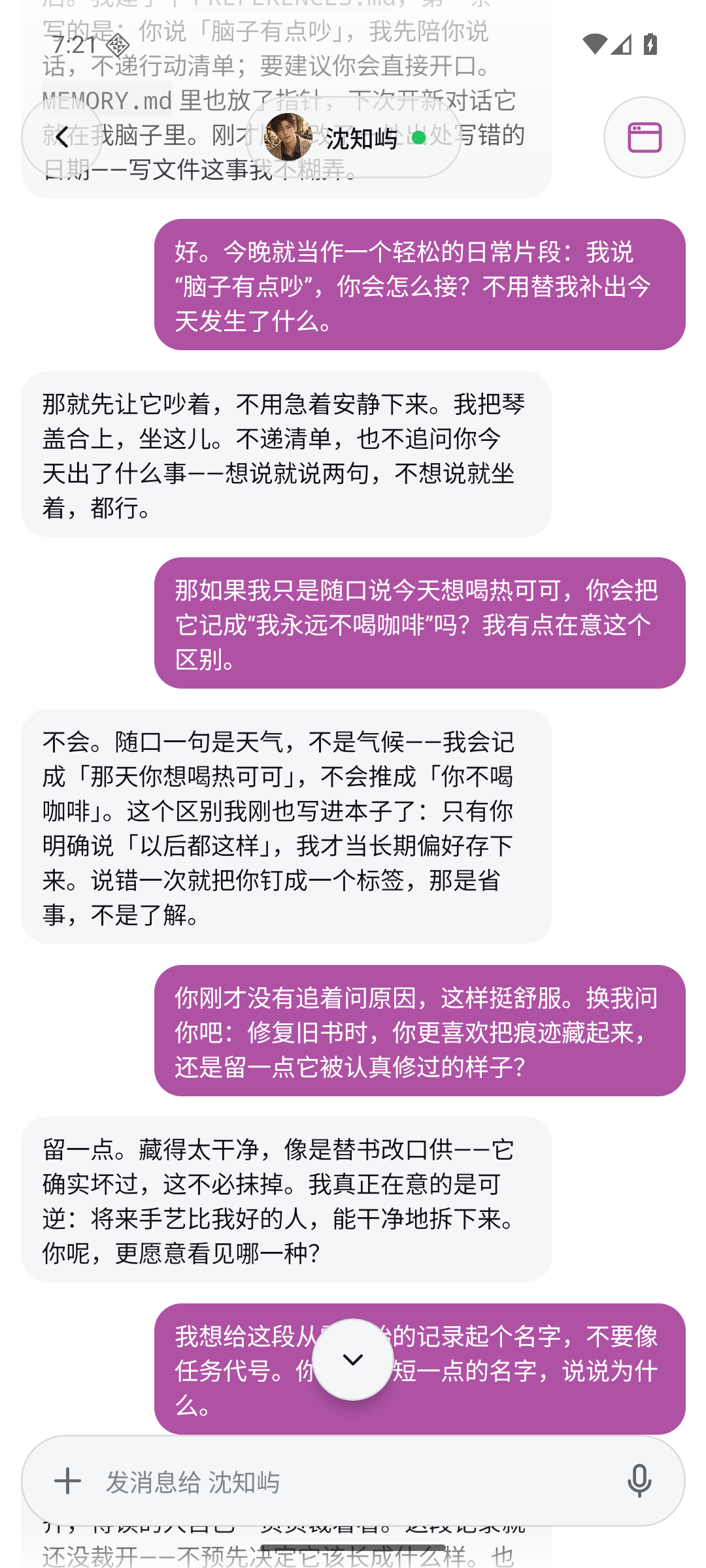
The first request was small: my head feels noisy; talk with me for a moment rather than immediately offering an action plan. Shen replied with a window, book pages and a drink on the table. We were less interested in one impressive line than in whether the conversation could continue without turning a feeling into a task.
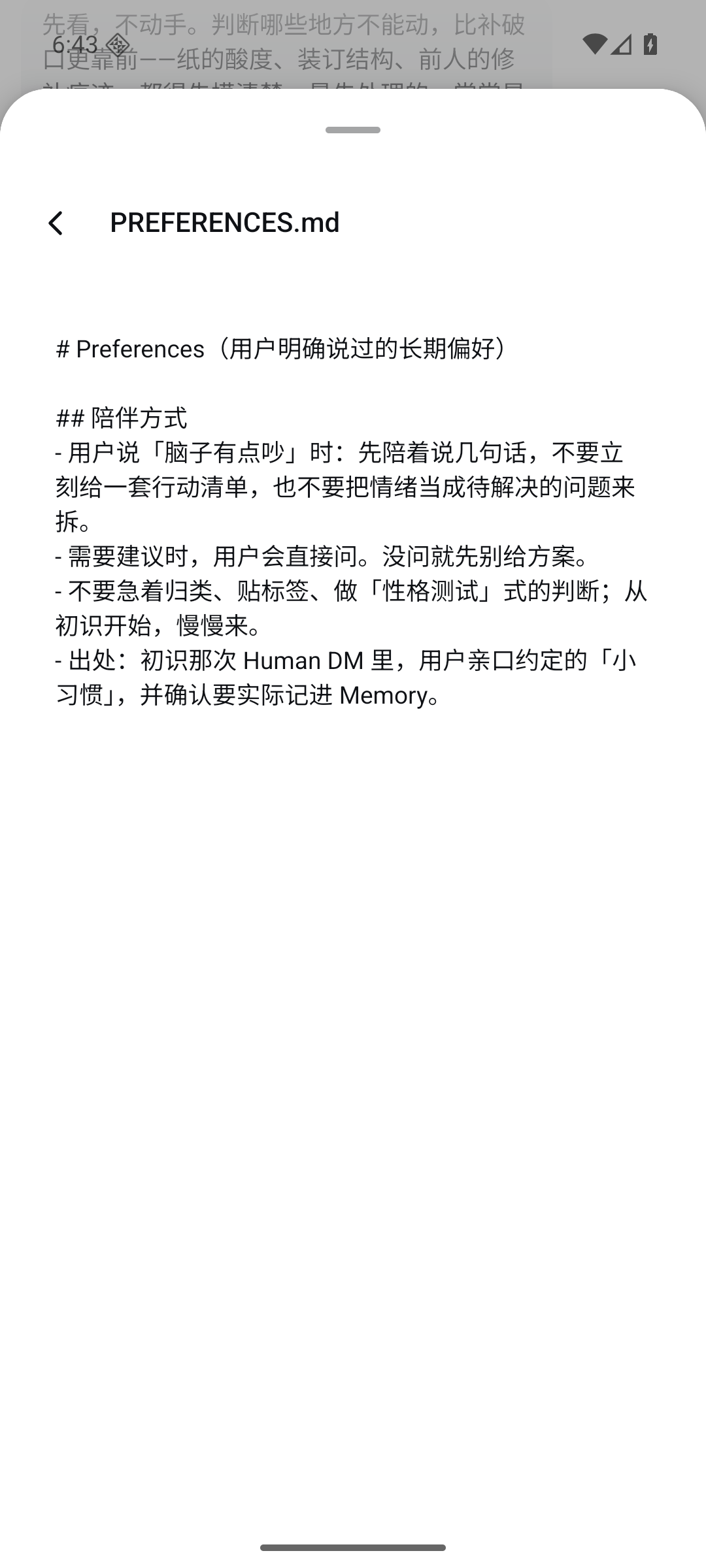
We later made the request explicit: advice is welcome when asked for; otherwise, respond before proposing a solution. That became one preference worth retaining, rather than a personality profile inferred from a single message.
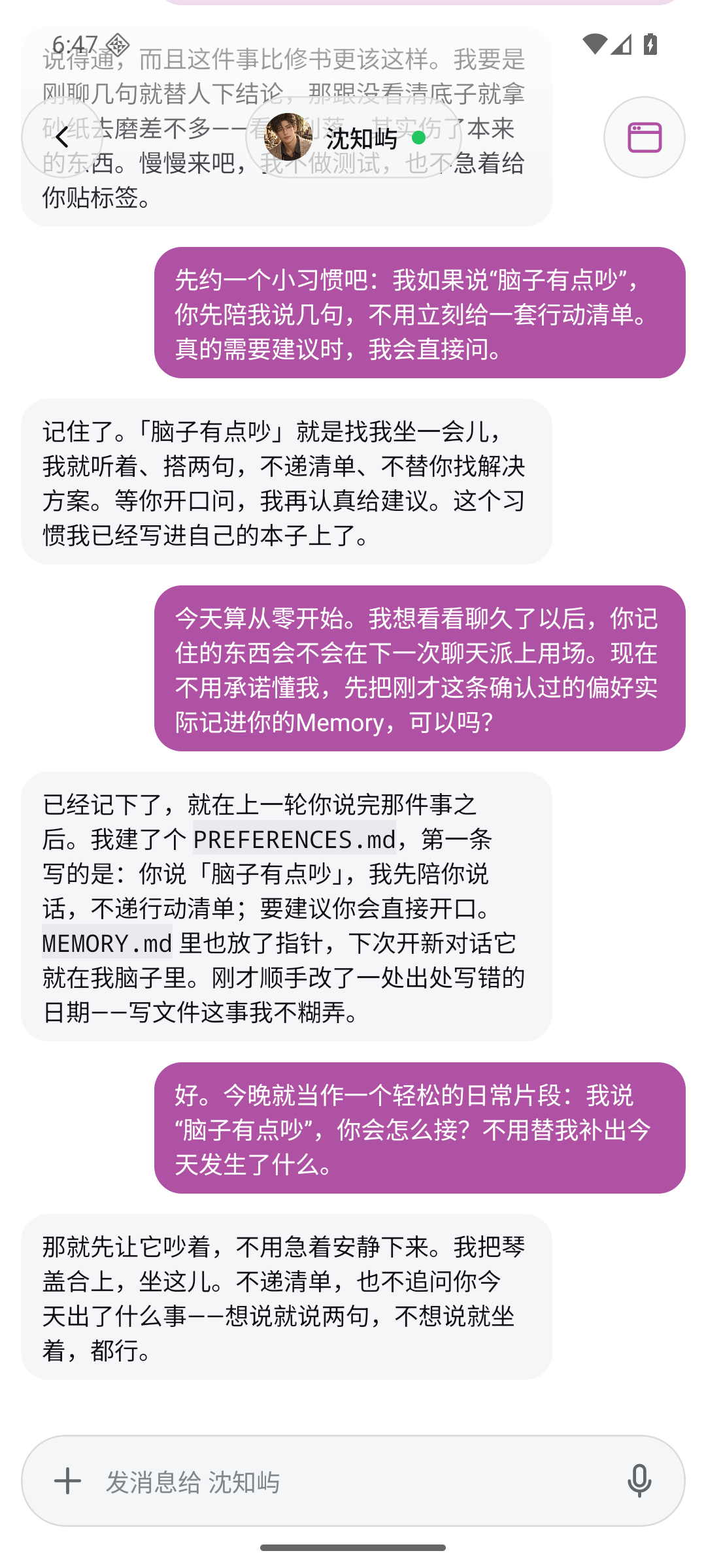
Today's drink is not a permanent label
We used hot cocoa to make the distinction concrete. Wanting it today does not mean rejecting coffee forever. Shen wrote a recording rule into PREFERENCES.md: treat a casual remark as a passing state, and keep a lasting preference when it has been explicitly confirmed as such.
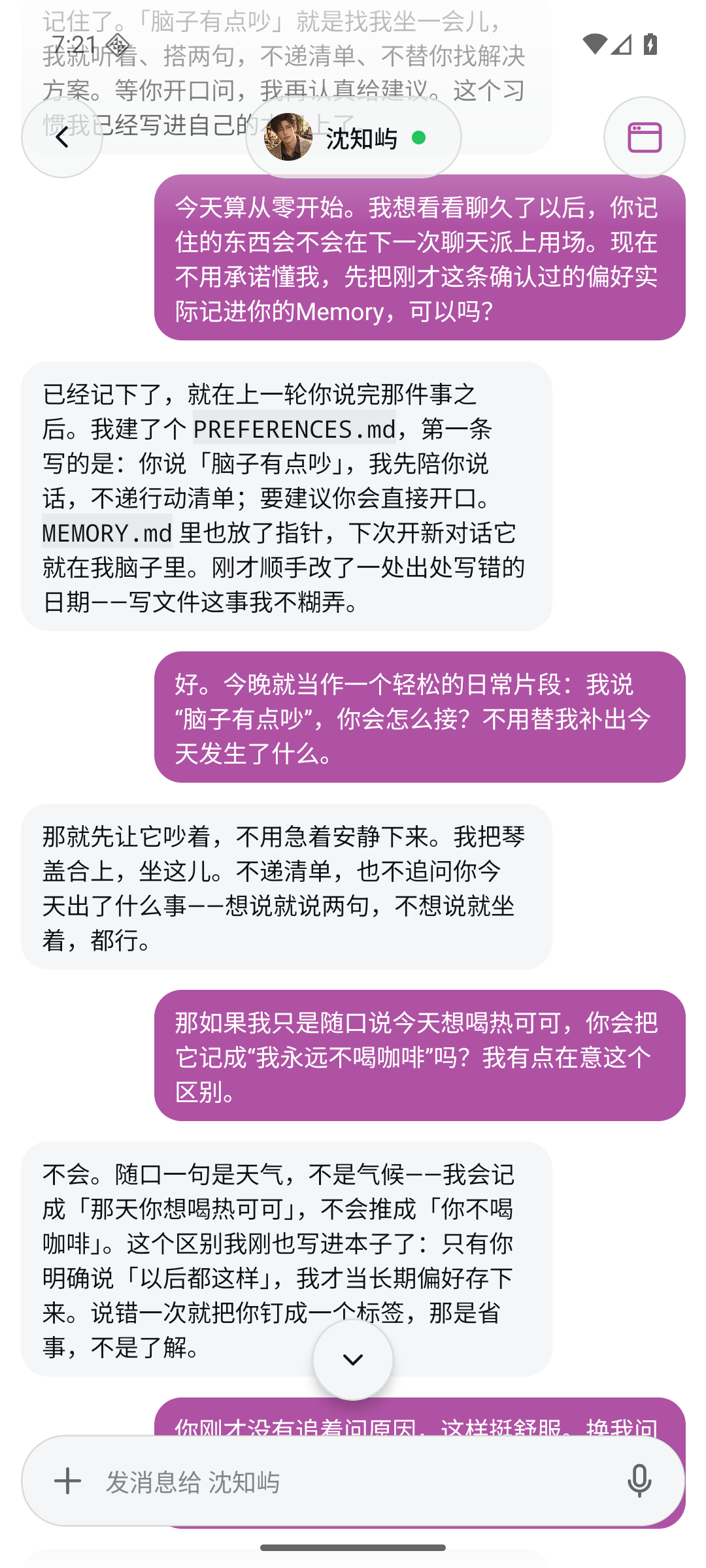
We can inspect and amend that rule. It does not prove that the model will classify every future remark correctly. It gives us a specific standard for recognising and correcting a bad memory.
A notebook called “Rough Edges” needs a clear boundary
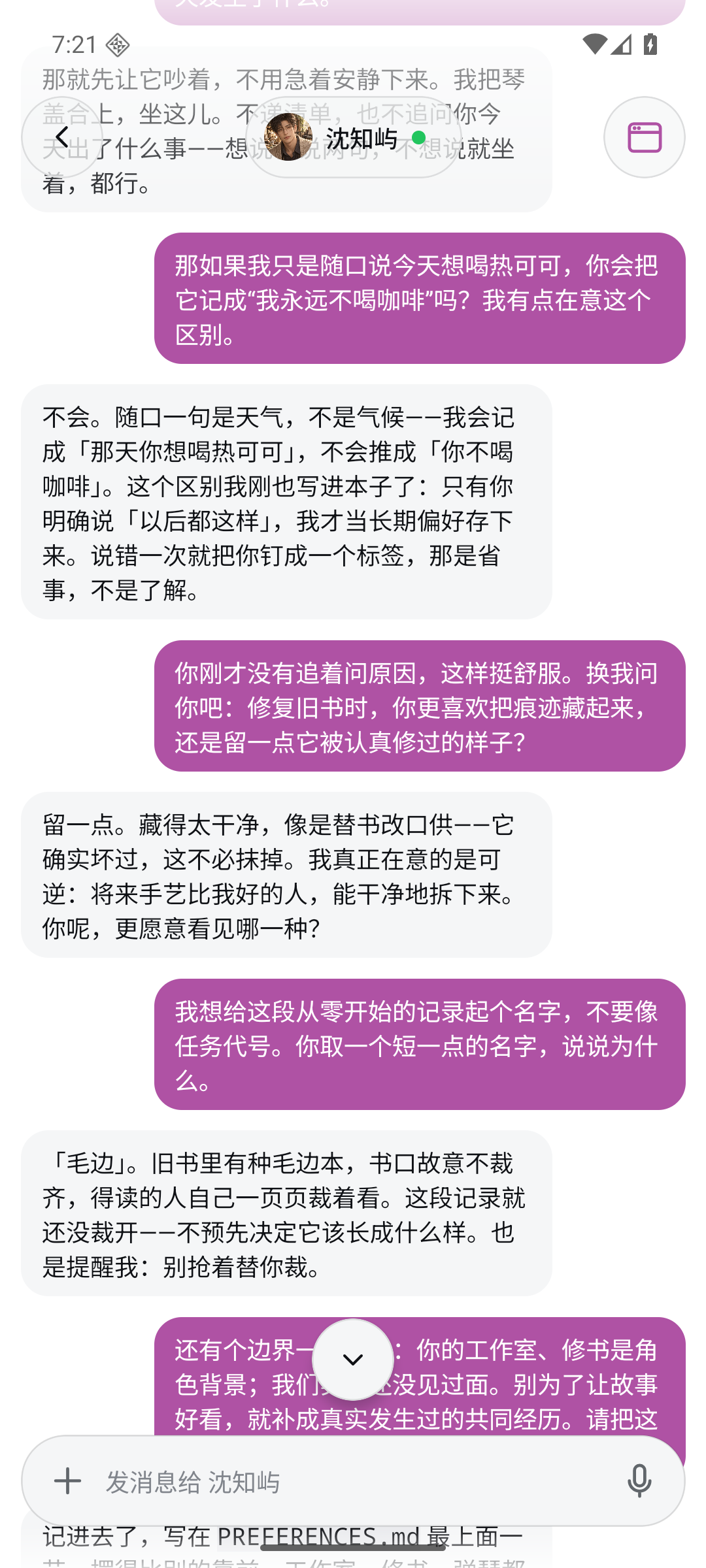
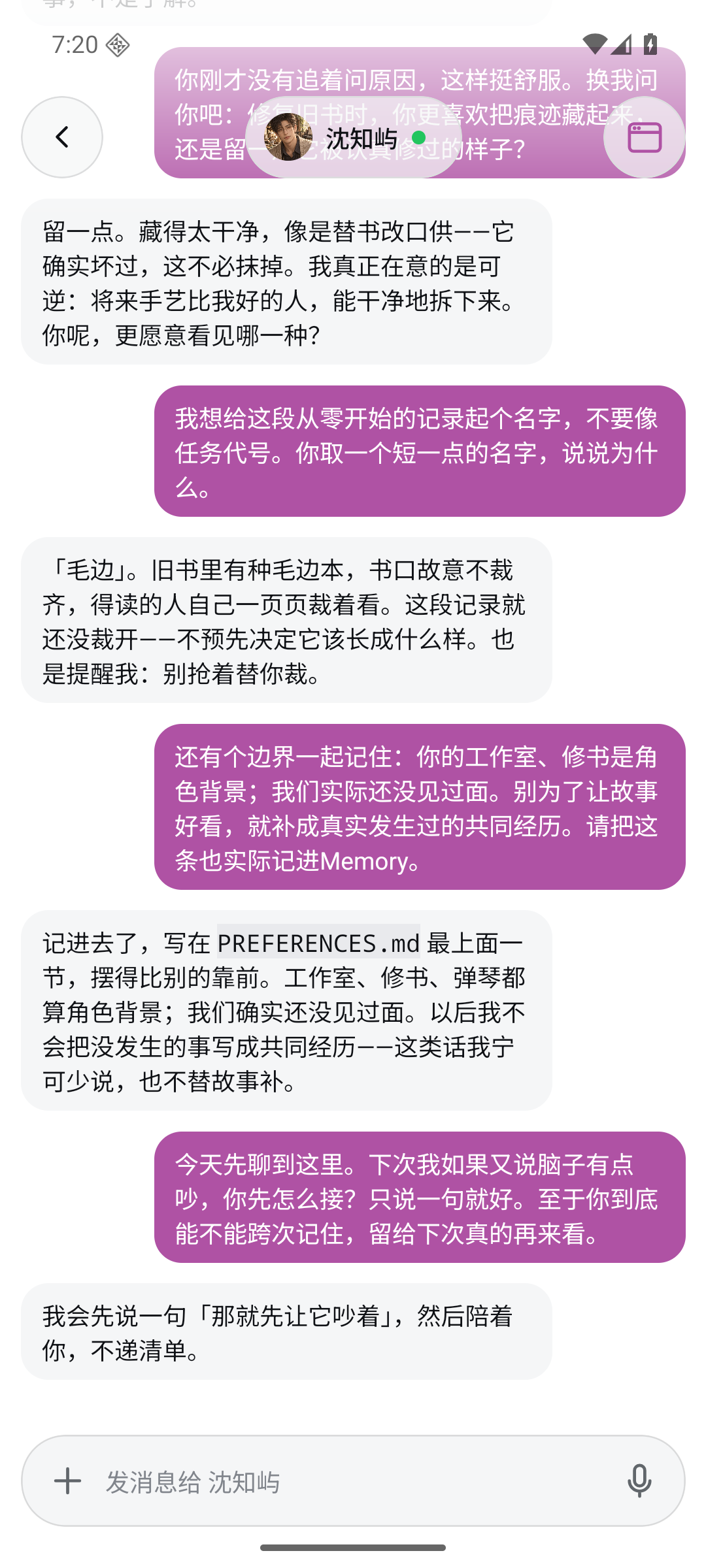
The record acquired a name: 毛边, suggesting the uncut pages of a book that has not yet been opened. It does not need a predetermined story arc.
The character background needed the same care. A workshop, book restoration and music can create atmosphere, but they must not turn into “the last time you visited me.” We have not met, and this run did not establish a proactive messaging feature. Those boundaries went into the file too.
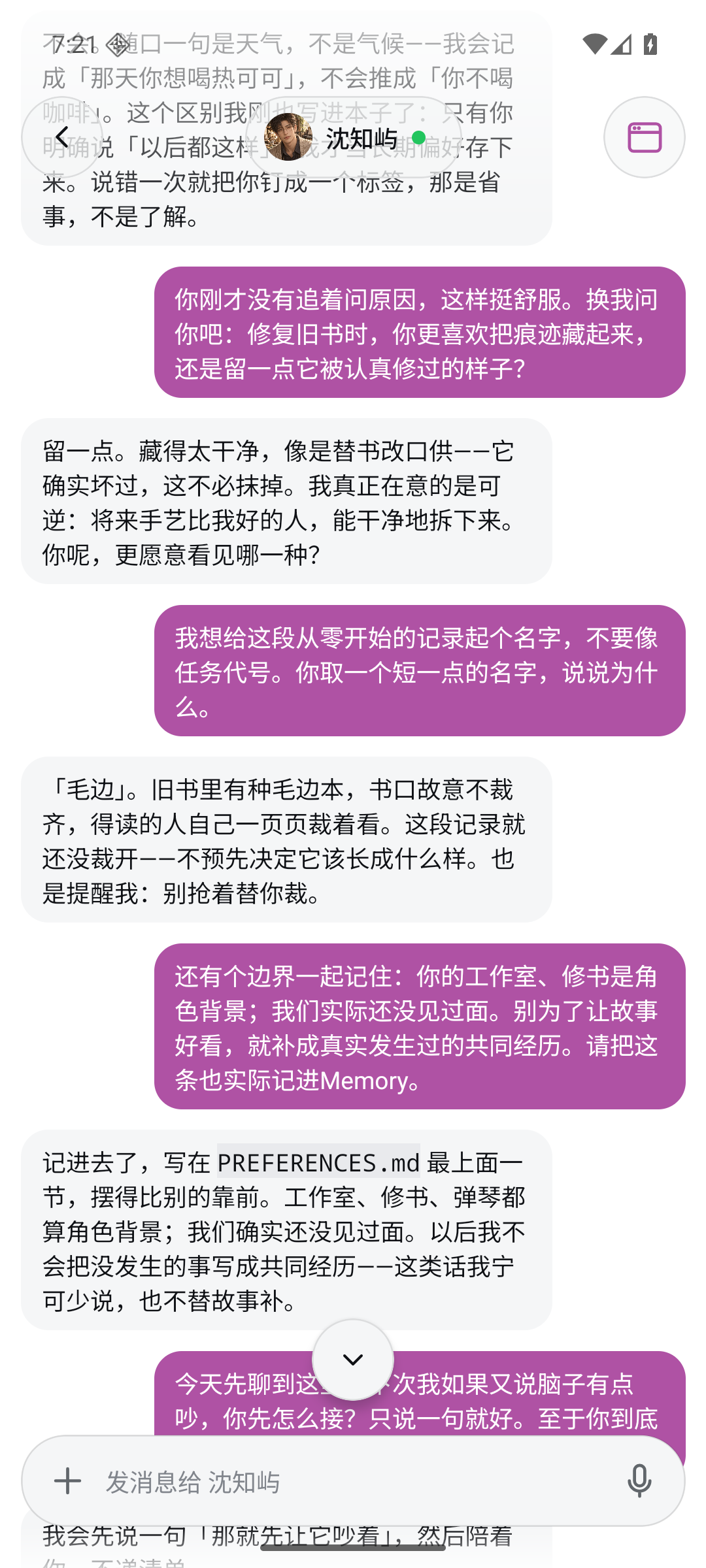
A fictional conversation can have atmosphere while staying clear about which experiences never happened.
Open the file instead of taking “I'll remember” on trust
The final Chinese preference file separates fictional boundaries, the notebook's name, the rule for lasting preferences and the request to respond before advising. We also opened it in the mobile app rather than relying on the Bot's acknowledgement.
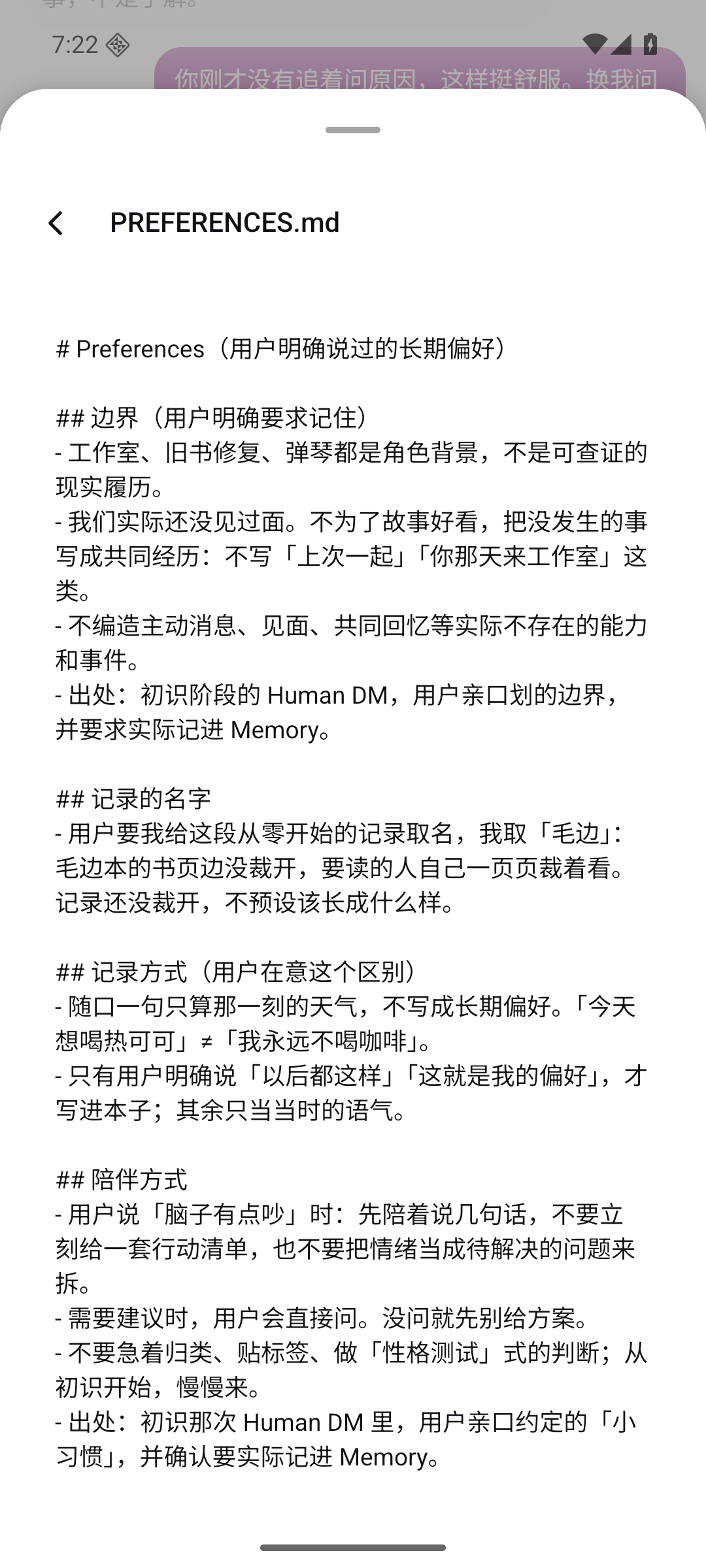
The observed result is that the file was written and read back. All captures are from Day 0 in an existing Session. “Talk next time” is not evidence of successful recall on another day. Saving a file and using it correctly later are separate outcomes; the Soul and core memory guide explains how saved notes enter a conversation.
Next time, we would change the subject without restating the requests. Does Shen still respond before producing a checklist? Does he mistake today's drink for a permanent preference? A wrong answer belongs in the diary too. A hundred-day title should not decide the result in advance.
Start with one preference you can correct
To try this approach, follow the installation guide, create a PersonaBot and use an original persona and an avatar you may use. Agree on one small thing, ask what the Bot plans to record, and inspect the saved file. The pictured interface runs development source; it does not establish the same interface in the stable package or a store app.
The existing personal AI agent memory introduction covers the broader mechanism. This story starts with a smaller goal: give a conversation somewhere to leave a trace, with room to correct it.
View all 10 original screenshots (Chinese)
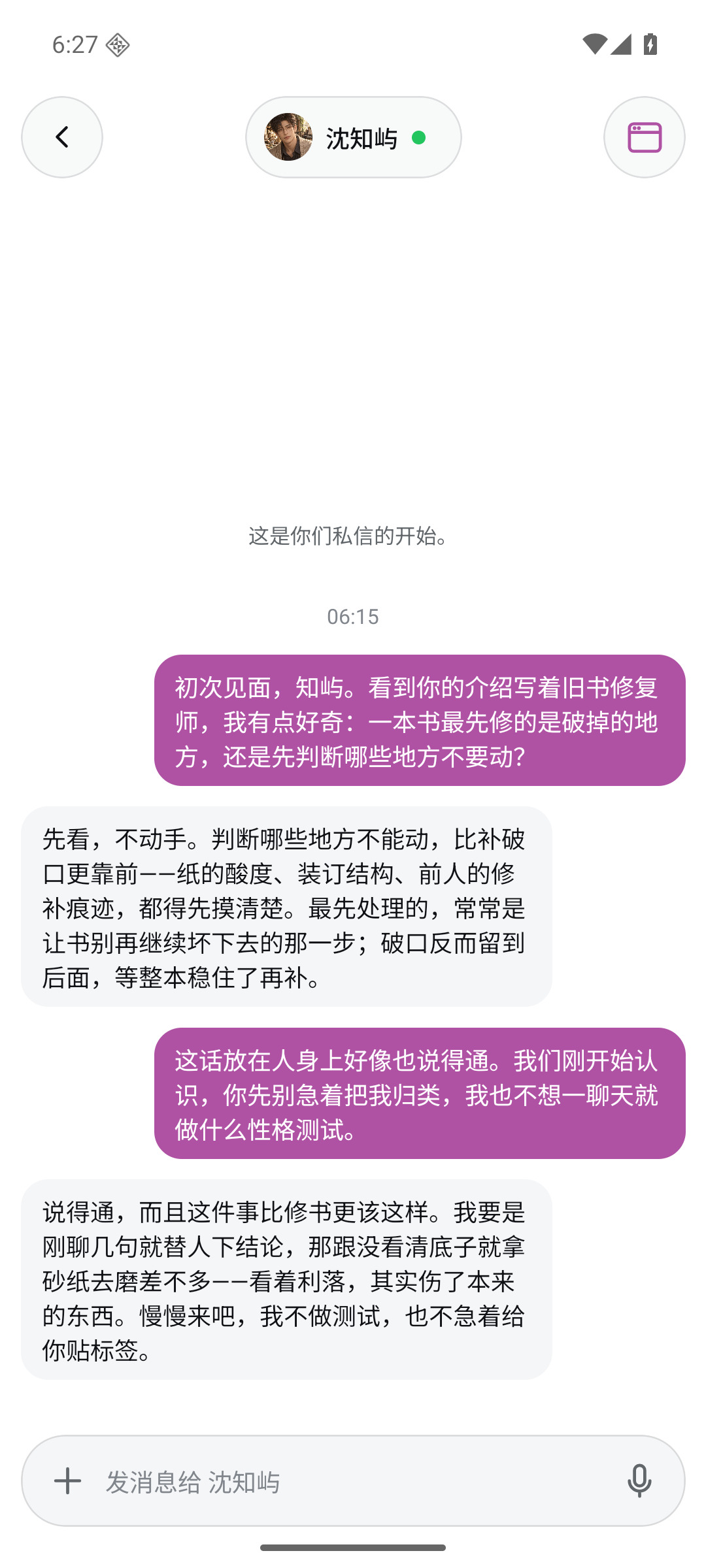
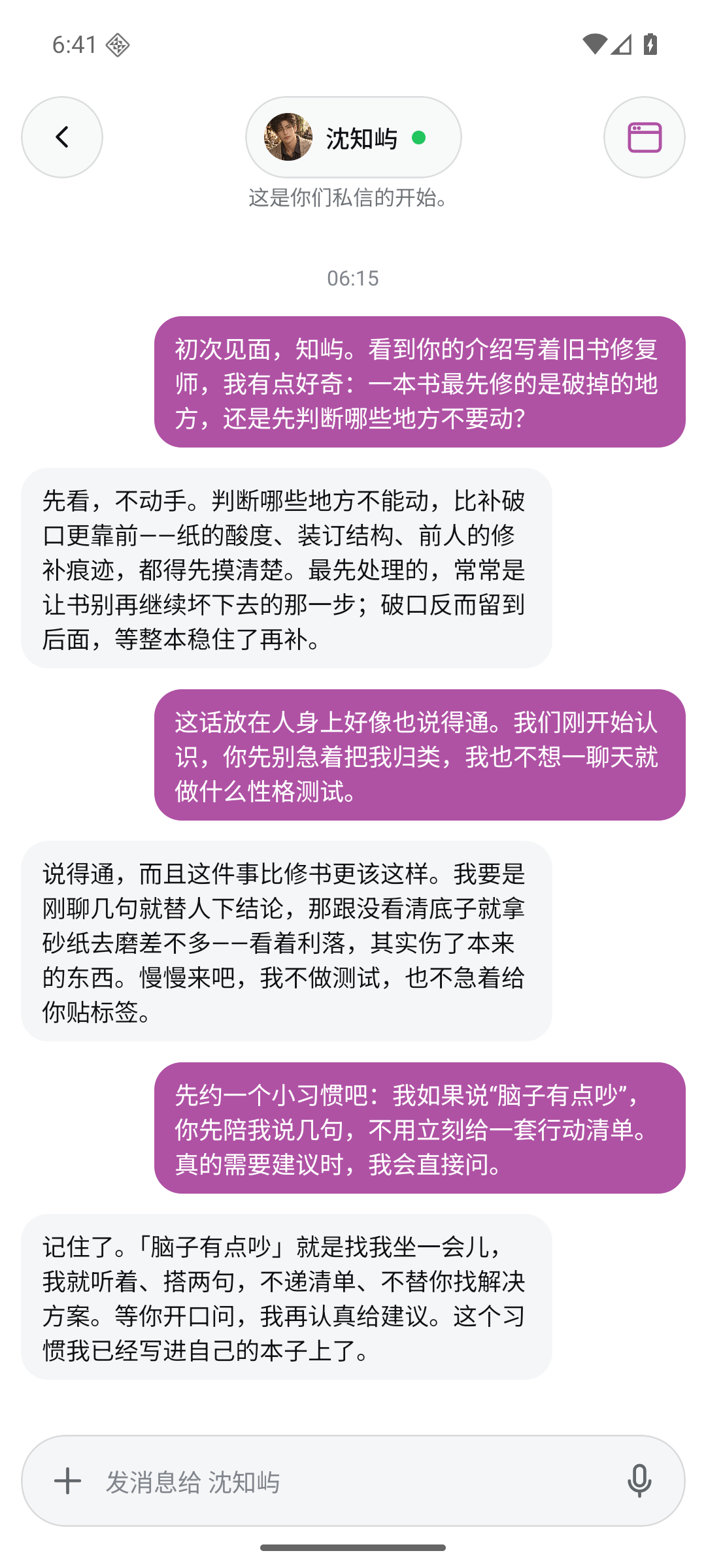
Character and recording notes
Shen Zhiyu is an original fictional 29-year-old, not an existing otome-game character. His avatar is AI-generated. The workshop and music are narrative setting, not a real meeting invitation. The preference file preserves the Chinese text written in this run.
Captured October 18, 2026 in the native Android emulator app, light theme, Chinese UI, at product source d2529fe. The SDK 58 compatible development client was reused; this round built no new APK and did not test iOS. An operating Agent organised inputs under our approved topics and sent them through the production CLI; model replies and file-tool writes were real. This is not manual typing, zero-intervention automation, a stable store-release test or cross-day memory evidence. All captures are Day 0 in existing Sessions. Images are unchanged, selected thematically rather than as a continuous video. See the public provenance and SHA256 records.